
Sannyasi-Fakir Rebellion: How Taxation and Famine Fuelled Resistance in Bengal
How famine, rising revenue demands and restrictions on traditional livelihoods helped fuel the Sannyasi-Fakir Rebellion in Bengal.
The late 18th century saw growing resistance to East India Company rule in Bengal and Bihar. Among the most sustained movements was the Sannyasi-Fakir Rebellion.
The movement involved Hindu sannyasis and Muslim fakirs. It developed amid changing revenue systems, economic distress and restrictions on traditional religious travel.
The resistance began taking shape in the 1760s. It continued in different forms across Bengal and Bihar for several decades, with major activity continuing into 1800.
When Company revenue power changed Bengal
A major turning point came in 1765. The East India Company received the diwani rights to collect revenue in Bengal, Bihar and Orissa.
This changed the Company’s role from a trading power to a major fiscal authority. Revenue collection became central to its administration and finances.
The new system placed pressure on cultivators and local landholders. It also affected communities that depended on traditional donations and religious grants.
Sannyasis and fakirs had long travelled through the region. Many depended partly on contributions from villagers and local landholders.
As economic pressure increased, those contributions became harder to collect. Company authorities also viewed large travelling groups with suspicion and imposed restrictions on their movement.
The Bengal famine of 1770 deepened the crisis
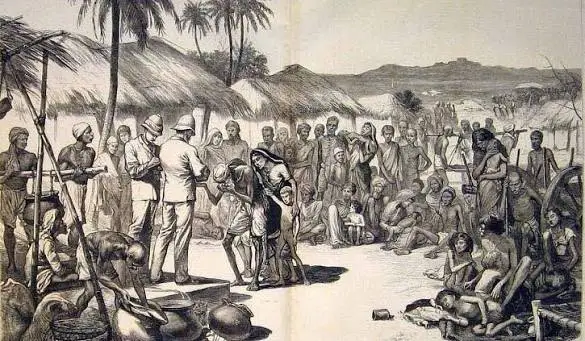
The famine of 1769-70 brought an even deeper crisis. Crop failures caused severe food shortages across large parts of Bengal.
Historical estimates of mortality vary. Some studies have placed the losses at around one-third of Bengal’s population.
The famine also damaged agricultural production and rural livelihoods. Yet revenue demands did not simply disappear during the crisis.
Research on Rajshahi records continued pressure to collect land revenue after the famine. It also describes peasants joining fakir-sannyasi groups more frequently after 1770.
The crisis therefore had several connected causes. Drought and crop failure created the immediate food shortage.
Economic policies and revenue practices made survival harder for many rural communities. Historians continue to debate the precise weight of each factor.
From religious restrictions to armed resistance
The movement was not driven by one single grievance. Restrictions on pilgrimage and alms collection combined with wider economic disruption.
Fakirs belonging to the Madaria Sufi tradition and sannyasis from Hindu ascetic orders formed important parts of the resistance. Their networks helped them move across Bengal and Bihar.
Some local peasants, artisans and former soldiers also became involved. Economic hardship created connections between these groups and the travelling religious communities.
Majnu Shah emerged as one of the best-known leaders. He helped organise fakirs and sannyasis across parts of Bengal and Bihar.
His activities linked religious networks with resistance against Company authority. The movement also received support from sections of the local population.
Why the Company struggled to suppress it
The resistance did not operate as one centralised army. It appeared in different districts and often relied on local networks.
The rebels targeted Company establishments and revenue centres. They also challenged local zamindars who were closely associated with the Company’s revenue system.
The geography of Bengal helped the movement survive. Rivers, forests and pilgrimage routes provided ways to move between different areas.
Company officials responded with military operations and tighter controls. The resistance nevertheless continued for decades.
A National Gallery of Modern Art record also links the uprising to famine, crop failures and Company taxation. It describes the clashes as recurring disturbances across Bengal.
A movement historians still debate
The movement’s historical character remains debated. Some historians describe it as an early anti-colonial resistance.
Others have stressed its links with religious networks, rural and economic disruption. Colonial records often portrayed rebels mainly as raiders or bandits.