Major Political Shake-Up as Rajya Sabha Chair Accepts Merger of Raghav Chadha and Other AAP MPs with BJP
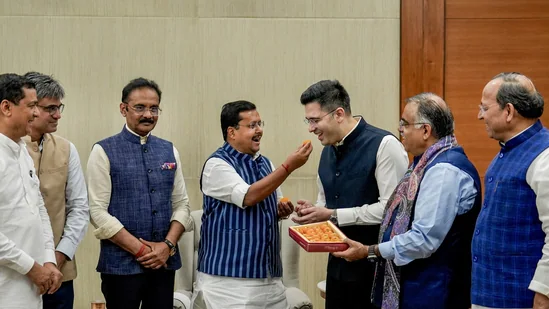
In a dramatic political development, Rajya Sabha Chairman C.P. Radhakrishnan has accepted the request of Raghav Chadha and six other former Aam Aadmi Party (AAP) members to merge with the Bharatiya Janata Party (BJP). The decision marks one of the most significant recent setbacks for AAP and further strengthens the BJP-led National Democratic Alliance (NDA) in the Upper House.
Soon after the approval, senior BJP leaders welcomed the MPs, calling their arrival a boost to “nation-building” and a sign of growing confidence in the NDA government.
Who Joined the BJP?
The group of seven MPs who exited AAP and moved into the BJP fold reportedly includes:
- Raghav Chadha
- Ashok Mittal
- Sandeep Pathak
- Vikramjit Singh Sahney
- Harbhajan Singh
- Swati Maliwal
- Rajinder Gupta
Their merger request was acknowledged and reflected in updated Rajya Sabha records.
Big Numbers Boost for BJP in Rajya Sabha
The political switch has significantly changed the balance of numbers in the Rajya Sabha.
According to reports:
- BJP strength rises to 113 seats
- NDA tally crosses 140 seats
- AAP strength falls sharply to 3 MPs
This gives the ruling alliance a stronger position in passing legislation and managing floor strategy in Parliament.
Why This Is a Massive Blow to AAP
For the Aam Aadmi Party, the development is more than just a numerical loss. Raghav Chadha was widely seen as one of AAP’s most prominent national faces, particularly among younger urban voters.
The exit of multiple Rajya Sabha MPs suggests internal unrest and strategic challenges within the party ahead of future elections.
Political observers say the move could impact:
- AAP’s national expansion plans
- Opposition unity under INDIA bloc
- Punjab political equations
- Fundraising and cadre morale
- Parliamentary visibility
BJP’s Political Message
The BJP quickly turned the moment into a political statement. Leaders said the defections showed growing acceptance of Prime Minister Narendra Modi’s leadership and dissatisfaction within opposition ranks.
Union minister statements framed the merger as a sign that capable leaders prefer governance-oriented politics over confrontation.
AAP Hits Back
AAP leaders have strongly opposed the development and reportedly approached the Rajya Sabha Chair seeking disqualification of the defecting MPs under anti-defection provisions. Party leaders alleged opportunism and betrayal of the mandate under which the MPs originally entered the Upper House.
This means the political battle may now move into constitutional and legal territory.
What About Anti-Defection Law?
Experts note that merger cases can become legally complex. If at least two-thirds of members of a legislative party split and merge, they may seek protection under relevant constitutional provisions.
Whether this case fully qualifies may depend on procedural scrutiny and any petitions filed against the move.
That means the story may not be over yet.
Raghav Chadha’s Importance
Raghav Chadha has long been one of AAP’s most recognizable national leaders—known for parliamentary speeches, media presence, and urban appeal.
His switch to BJP could make him an important face for the party, especially in:
- Delhi urban politics
- Youth outreach
- Punjab strategy
- Middle-class messaging
- Parliament debates
Impact on Parliament
With a stronger tally in Rajya Sabha, the NDA may gain smoother momentum on pending reforms, bills, and legislative priorities.
While Rajya Sabha often requires coalition management, every additional seat matters in close votes.
Public Reaction Mixed
The development has sparked strong reactions across social media:
- Some called it strategic realism
- Others called it betrayal
- Supporters saw it as growth for BJP
- Critics said it weakens opposition democracy
The coming weeks will likely reveal whether this shift changes voter sentiment.