Samrat Choudhary becomes Bihar CM, marking BJP’s first leadership at the helm
Prior to taking charge as chief minister, the BJP leader held key roles as deputy chief minister and home minister in the government led by Nitish Kumar.
Samrat Choudhary sworn in as Bihar CM, BJP marks historic first in state leadership
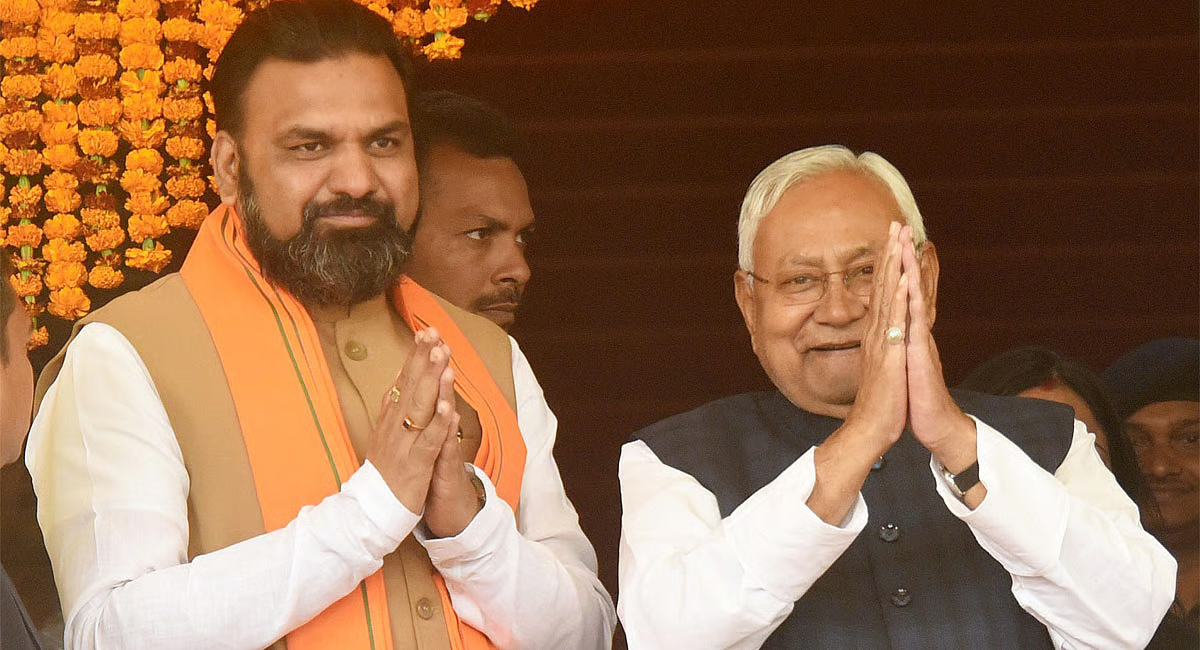
In a landmark political shift, Samrat Choudhary on Wednesday took oath as the Chief Minister of Bihar, becoming the first leader from the Bharatiya Janata Party (BJP) to hold the top post in the state. The swearing-in ceremony, held at Patna’s Lok Bhavan, marked a significant turning point in Bihar’s political landscape, long dominated by regional leadership.
The development follows the resignation of veteran leader Nitish Kumar, whose tenure as Chief Minister spanned nearly two decades with intermittent breaks. With this transition, Bihar enters what political observers are calling a “new era” of governance under BJP’s direct leadership.
End of an Era, Beginning of a New Chapter
For years, Bihar’s politics revolved around coalition dynamics, with BJP playing a crucial but secondary role. While the party had been part of multiple governments, it had never held the मुख्यमंत्री (Chief Minister) position—until now.
With Samrat Choudhary taking charge, BJP has firmly established itself as the dominant force in the state’s political equation. Analysts view this move as part of a broader national strategy to strengthen the party’s footprint across key states.

The oath-taking ceremony was attended by senior political leaders, party workers, and supporters, symbolizing both continuity and change. Alongside Choudhary, a few key leaders were also inducted into the cabinet, with expectations of further expansion in the coming days.
From Deputy CM to Chief Minister
Before ascending to the top post, Samrat Choudhary had been serving as Deputy Chief Minister and also handled the crucial Home portfolio in the government led by Nitish Kumar. His administrative experience and organizational skills within the BJP played a key role in his elevation.
Choudhary’s political journey has been marked by steady growth and adaptability. Starting his career in regional politics, he later aligned with BJP and quickly rose through the ranks. His appointment is also seen as a strategic decision to consolidate support among Other Backward Classes (OBCs), a crucial voter base in Bihar.
A Strategic Political Move
The decision to appoint Samrat Choudhary as Chief Minister is not just symbolic but also strategic. BJP, which has emerged as a strong political force in Bihar over the years, is now aiming to translate its electoral strength into direct governance.
Political experts believe that this move mirrors similar strategies adopted by the party in other states, where it has sought to transition from a coalition partner to the primary ruling force. The shift is expected to have long-term implications for Bihar’s political dynamics, especially ahead of upcoming elections.
Challenges Ahead
While the transition marks a historic milestone, the road ahead is not without challenges. Bihar continues to grapple with issues such as unemployment, infrastructure gaps, migration, and law and order concerns.
As Chief Minister, Samrat Choudhary will be under pressure to deliver on development promises and ensure stable governance. His performance in the coming months will be closely watched, not just in Bihar but across the national political spectrum.
Focus on Development and Governance
In his initial remarks after taking oath, Choudhary emphasized his commitment to taking Bihar towards a new phase of development. He expressed gratitude to party leadership and acknowledged the contributions of his predecessor, Nitish Kumar.
He also reiterated the importance of a “double-engine government,” referring to alignment between the state and the central government, which he believes will accelerate development projects and improve governance outcomes.
Political Significance
The appointment of Samrat Choudhary as Chief Minister is being viewed as a defining moment in Bihar’s political history. For BJP, it represents the culmination of years of groundwork and strategic positioning in the state.
For the opposition, it signals a need to reassess strategies in a rapidly evolving political environment. The shift also reflects changing voter preferences and the growing influence of national parties in regional politics.
What Lies Ahead
As Bihar steps into this new political phase, all eyes will be on how effectively the new leadership translates its promises into action. Governance, development, and public welfare will remain key benchmarks for success.
For now, the swearing-in of Samrat Choudhary as Chief Minister stands as a historic moment—one that could redefine Bihar’s political trajectory in the years to come.