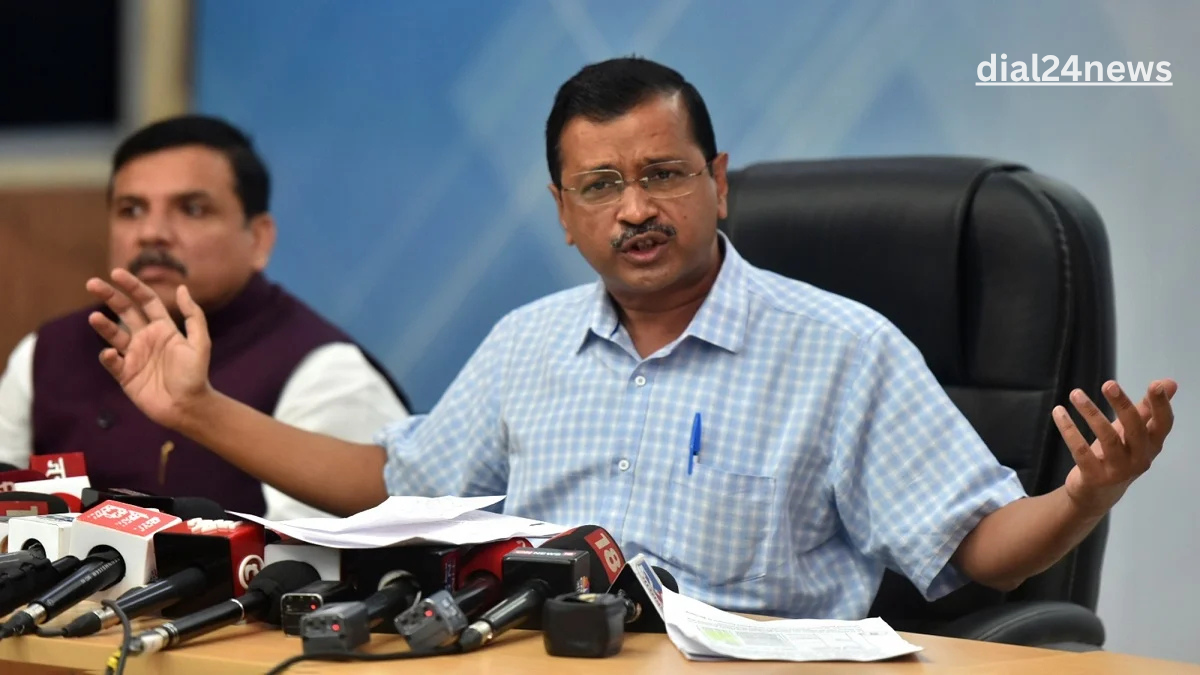
The affidavit submitted on Tuesday argued that concerns of bias in this case are clear, significant, and cannot be ignored.
Arvind Kejriwal files fresh affidavit in Delhi HC, seeks judge’s recusal citing ‘Centre-linked conflict’
In a significant legal development, Aam Aadmi Party (AAP) national convener and former Delhi Chief Minister Arvind Kejriwal has submitted an additional affidavit before the Delhi High Court, intensifying his plea for the recusal of Justice Swarana Kanta Sharma in the ongoing excise policy case.
The latest filing introduces fresh arguments and supporting material, with Kejriwal asserting that there exists a serious and direct apprehension of bias that cannot be ignored. The plea has added a new dimension to an already high-profile legal battle, drawing attention from both political and legal circles.
Fresh Affidavit Raises Conflict Concerns
In his newly filed affidavit, Kejriwal has pointed to what he describes as a potential conflict of interest involving the judge’s family members. According to the submission, official records indicate that Justice Sharma’s children are empanelled as legal counsel for the Central government.
Kejriwal argued that these roles are not merely honorary but involve active professional engagements, including receiving case assignments linked to the Centre. He further highlighted that the Solicitor General of India—who is representing the Central Bureau of Investigation (CBI) in the case—is part of the system that allocates such work.
This, according to the affidavit, creates a situation where there is a “direct and substantial” connection that could raise questions about impartiality.
‘Serious and Direct Apprehension of Bias’

The affidavit, filed earlier this week, clearly states that the perceived risk of bias is not remote or hypothetical but immediate and significant. It emphasizes that such concerns go beyond mere suspicion and could impact public confidence in judicial neutrality.
Kejriwal has maintained that he is not alleging any personal wrongdoing or actual bias on the part of the judge. Instead, his argument is centered on the “appearance of bias,” which, in legal terms, can be sufficient grounds for recusal if it undermines trust in fair proceedings.
Legal experts note that the concept of “reasonable apprehension of bias” is well-established in judicial practice, where even the perception of partiality can warrant a judge stepping aside to preserve institutional credibility.
Background: The Excise Policy Case
The case in question relates to the now-scrapped Delhi excise policy, in which Kejriwal and several others were earlier discharged by a trial court. However, the CBI has challenged that discharge before the Delhi High Court, bringing the matter back into legal scrutiny.
Kejriwal has been personally involved in presenting arguments in court, even appearing without senior legal representation at times. In earlier hearings, he had already raised multiple concerns regarding the fairness of the proceedings and sought the judge’s recusal on various grounds.
The additional affidavit now strengthens his earlier plea by introducing what he calls “newly discovered facts” obtained through public records and Right to Information (RTI) data.
Details Highlighted in the Plea
The affidavit elaborates on the professional roles of the judge’s children, stating that:
- They are empanelled as Central government counsel
- They receive case assignments through official channels
- Their engagement with the Centre is ongoing and substantial
Kejriwal argued that since the Solicitor General—who is opposing him in court—is connected to the process of assigning cases to such counsel, it creates a situation that could be perceived as a conflict of interest.
He further stressed that in politically sensitive cases, especially those involving opposition leaders and central agencies, maintaining the highest standards of neutrality is crucial.
Political and Legal Reactions
The move has sparked strong reactions across political circles. While AAP leaders have defended the plea as a legitimate legal step to ensure fairness, critics have questioned the timing and intent behind the request.
The legal community, meanwhile, remains divided. Some experts believe that raising such concerns is within a litigant’s rights, particularly when supported by documented evidence. Others argue that repeated recusal pleas could disrupt judicial proceedings and delay the resolution of important cases.

What Happens Next?
The Delhi High Court is expected to consider the additional affidavit alongside the earlier recusal application. Justice Swarana Kanta Sharma has already reserved her decision on the matter after hearing arguments from both sides in previous proceedings.
The outcome of this plea could have significant implications—not just for the excise policy case but also for broader debates around judicial impartiality and the standards for recusal in India.