Europe Omega Heatwave: Record Temperatures, Rising Death Toll and Countries Hit the Hardest
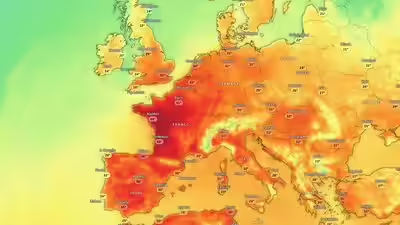
The Europe Omega Heatwave has pushed temperatures to unprecedented levels across Western and Central Europe, making it one of the most severe early-summer heat events ever recorded. A persistent high-pressure weather system, known as an Omega Block, has trapped hot air over the continent for several days, leading to dangerous temperatures, widespread heat alerts, infrastructure disruptions, and dozens of reported deaths.
Governments across Europe have issued emergency warnings as hospitals deal with heat-related illnesses and emergency services respond to a growing number of incidents. Schools have closed in several regions, power grids are under pressure, and authorities are urging residents to avoid outdoor activities during peak daytime hours.
Why Is It Called an “Omega” Heatwave?
The event is named after the Omega Block, an atmospheric weather pattern in which a strong high-pressure system becomes trapped between two low-pressure systems. On weather maps, this pattern resembles the Greek letter Ω (Omega).
Because the high-pressure system remains nearly stationary, hot air becomes trapped over the same regions for days instead of moving away. This results in prolonged sunshine, minimal cloud cover, and continuously rising temperatures. Meteorologists say this atmospheric pattern is responsible for the extreme and persistent heat affecting much of Europe.
Countries Hit the Hardest
Several European countries are experiencing record-breaking temperatures and widespread disruption.
France
France is among the worst-affected nations. Authorities reported their hottest June temperatures on record, with Paris reaching around 40.9°C. Thousands of schools were closed, electricity disruptions affected tens of thousands of residents, and officials reported dozens of heat-related deaths.
United Kingdom
The UK recorded its hottest June day ever, with temperatures climbing to 36.7°C. More than a thousand schools temporarily closed, and health authorities issued red heat warnings across several regions.
Italy
Italy placed multiple cities under the highest heat alert level as temperatures continued rising. Regional governments introduced restrictions on outdoor work during the hottest hours to protect construction workers, farmers, and other outdoor employees.
Spain
Spain experienced extreme temperatures, particularly in northern regions where weather agencies issued red alerts. Authorities warned residents about wildfire risks and advised people to remain indoors whenever possible.
Switzerland
Switzerland also recorded its hottest June temperatures on record, with some areas approaching 38°C, prompting widespread heat advisories.
Germany and Luxembourg
Germany and Luxembourg remained under red heat alerts as authorities warned of dangerous conditions, particularly for older adults and individuals with underlying health conditions.
Record Temperatures Across Europe
The heatwave has broken numerous long-standing weather records.
Some of the most significant observations include:
- Paris recorded around 40.9°C, its hottest June temperature on record.
- The UK reached 36.7°C, setting a new June record.
- Switzerland recorded temperatures close to 38°C.
- France experienced its hottest June day since official measurements began in 1947.
Meteorologists say the combination of unusually high daytime temperatures and exceptionally warm nights has made the heat particularly dangerous because people receive little overnight relief.
Death Toll and Major Disruptions
The extreme weather has resulted in significant human and economic impacts.
Authorities have reported dozens of fatalities linked to the heatwave, with France recording at least 50 deaths, while additional heat-related and drowning deaths have been reported in Italy and Germany.
Other disruptions include:
- Closure of more than 13,000 schools in France.
- Temporary closure of schools across parts of the UK and Italy.
- Power outages affecting thousands of households.
- Reduced electricity generation as some power facilities limited operations because of extreme temperatures.
- Rising electricity prices due to increased demand for air conditioning.
Scientists Link Heatwave to Climate Change
Climate scientists say the severity of the Europe Omega Heatwave has been amplified by human-driven climate change.
According to researchers, while Omega Block weather patterns occur naturally, rising global temperatures are making such heatwaves more intense, more frequent, and longer-lasting. A recent scientific assessment concluded that the current event would have been extremely unlikely without climate change.
Experts also warn that Europe is especially vulnerable because many homes, schools, and public buildings were designed to retain heat during cold winters rather than cope with prolonged periods of extreme summer temperatures.
Safety Measures Issued Across Europe
Authorities are advising residents to take precautions during the ongoing heatwave.
Recommendations include:
- Drink plenty of water throughout the day.
- Avoid outdoor activities during afternoon hours.
- Stay in air-conditioned or shaded environments.
- Check regularly on elderly family members and neighbors.
- Never leave children or pets inside parked vehicles.
- Follow local emergency weather advisories.
Public health officials continue monitoring the situation as forecasts suggest temperatures may remain above seasonal averages in several regions over the coming days.
Also read: Ram Temple Donation Row: FIR Filed Against Eight as Probe Into Alleged Donation Theft Widens