‘Red Flags’ Storm Iran Streets as Mourners Attend Khamenei’s Funeral: What Do They Signify?
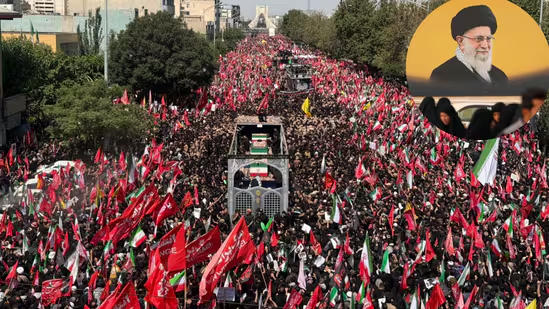
Red Flags Storm Iran Streets as hundreds of thousands of mourners gathered in Tehran for the funeral procession of Ayatollah Ali Khamenei, prompting widespread curiosity about the striking crimson banners seen across the capital. The flags, carried by mourners and displayed on buildings and religious sites, are far more than decorative symbols. They hold profound religious, historical, and political significance in Shia Islam, representing martyrdom, sacrifice, and the continuing pursuit of justice. Their prominent display during the funeral has once again drawn global attention to one of Iran’s most recognizable symbols.
In recent years, red flags have become especially visible during periods of national mourning, military conflict, and major religious commemorations. Their appearance at Khamenei’s funeral has sparked questions worldwide about what they truly signify and why they continue to play such an important role in Iranian public life.
What Do the Red Flags Mean?
The Red Flags Storm Iran Streets phenomenon is deeply rooted in Shia Islamic tradition. Unlike ordinary national or political flags, these crimson banners symbolize the blood of innocent martyrs whose deaths remain unavenged.
The symbolism is closely associated with Imam Hussein ibn Ali, the grandson of Prophet Muhammad, who was killed in the Battle of Karbala in 680 CE. His martyrdom is one of the defining events in Shia Islam, and the red flag represents both remembrance of his sacrifice and a continuing call for justice against oppression.
For many Shia Muslims, the red banner serves as a reminder that the struggle for justice continues until the wrongs suffered by Imam Hussein and other martyrs are fully avenged.
Why Were Red Flags Seen at Khamenei’s Funeral?
During the funeral procession, mourners waved thousands of red flags alongside black mourning banners and Iranian national flags.
Religious scholars explain that the red banners symbolize respect for those regarded as defenders of the nation and the faith. Their use during the ceremony reflected themes of sacrifice, resistance, and national unity rather than being merely ceremonial decorations.
The funeral procession transformed central Tehran into a sea of black and red, with the crimson flags standing out prominently among the crowds.
Historical Significance of the Red Flag
The tradition of displaying red banners dates back centuries in Shia history.
Historically, red flags were raised over shrines connected to Imam Hussein and other revered figures to signify that justice for their martyrdom remained incomplete. Unlike black flags, which primarily represent mourning, red banners also convey determination, courage, and the commitment to continue resisting injustice.
Because of this symbolism, the flags have become powerful visual representations during important religious ceremonies and national events in Iran.
Religious and Political Symbolism
Although rooted in religion, the red flag has also acquired political significance over time.
Iranian leaders and religious institutions have occasionally used the symbol during periods of heightened regional tensions or after attacks involving Iranian interests. In such contexts, the flag can represent national resilience and a commitment to respond to perceived aggression.
However, many religious scholars emphasize that the flag’s original meaning remains spiritual, focusing on remembrance of sacrifice rather than promoting conflict.
Why the Flags Draw Global Attention
Whenever red flags appear across Iran, international observers often interpret them differently because of their association with moments of political tension.
Images of crimson banners flying above mosques or carried during public gatherings frequently circulate on social media, leading to speculation about their meaning. Experts note that while the flags can coincide with significant political developments, their symbolism is primarily connected to centuries-old Shia traditions rather than serving as official declarations of military action.
Understanding this historical context helps explain why the banners are displayed during major religious events such as funerals, Ashura commemorations, and memorial ceremonies.
Public Reaction
Photographs of the funeral procession quickly spread across social media, with many users asking about the significance of the red flags.
Historians and Middle East experts explained that the banners represent remembrance, resistance against injustice, and reverence for martyrs. Others pointed out that their appearance reflects a tradition that predates modern political conflicts by more than a thousand years.
The discussion has encouraged many people outside the region to learn more about Shia history and the symbolism associated with important religious ceremonies.
Also read: Mumbai Schools and Colleges Closed as IMD Issues Orange Alert | Monsoon LIVE Updates