NEET Exam to Become Computer-Based From Next Year After Paper Leak Row, Says Centre
NEET Exam to Go Computer-Based From Next Year Amid Paper Leak Controversy: Centre’s Big Reform Move
In a major policy shift following the NEET-UG 2026 paper leak controversy, the Central Government has announced
that the NEET examination will be conducted in a Computer-Based Test (CBT) format from next year.
The decision comes amid nationwide outrage, cancellations, and ongoing investigations into alleged question
paper leaks that have shaken trust in India’s biggest medical entrance exam.
The announcement was made by Union Education Minister Dharmendra Pradhan, who stated that the move aims
to strengthen exam security and eliminate malpractice risks in high-stakes competitive tests like NEET.
Why the NEET Exam Format Is Changing
The decision follows the NEET-UG 2026 controversy, where allegations of a “guess paper” leak led to
serious questions about the integrity of the exam system. Investigations reportedly found that portions of the
exam matched leaked content circulated before the test.
Key developments that triggered the reform:
- Alleged circulation of leaked question papers disguised as “guess papers”
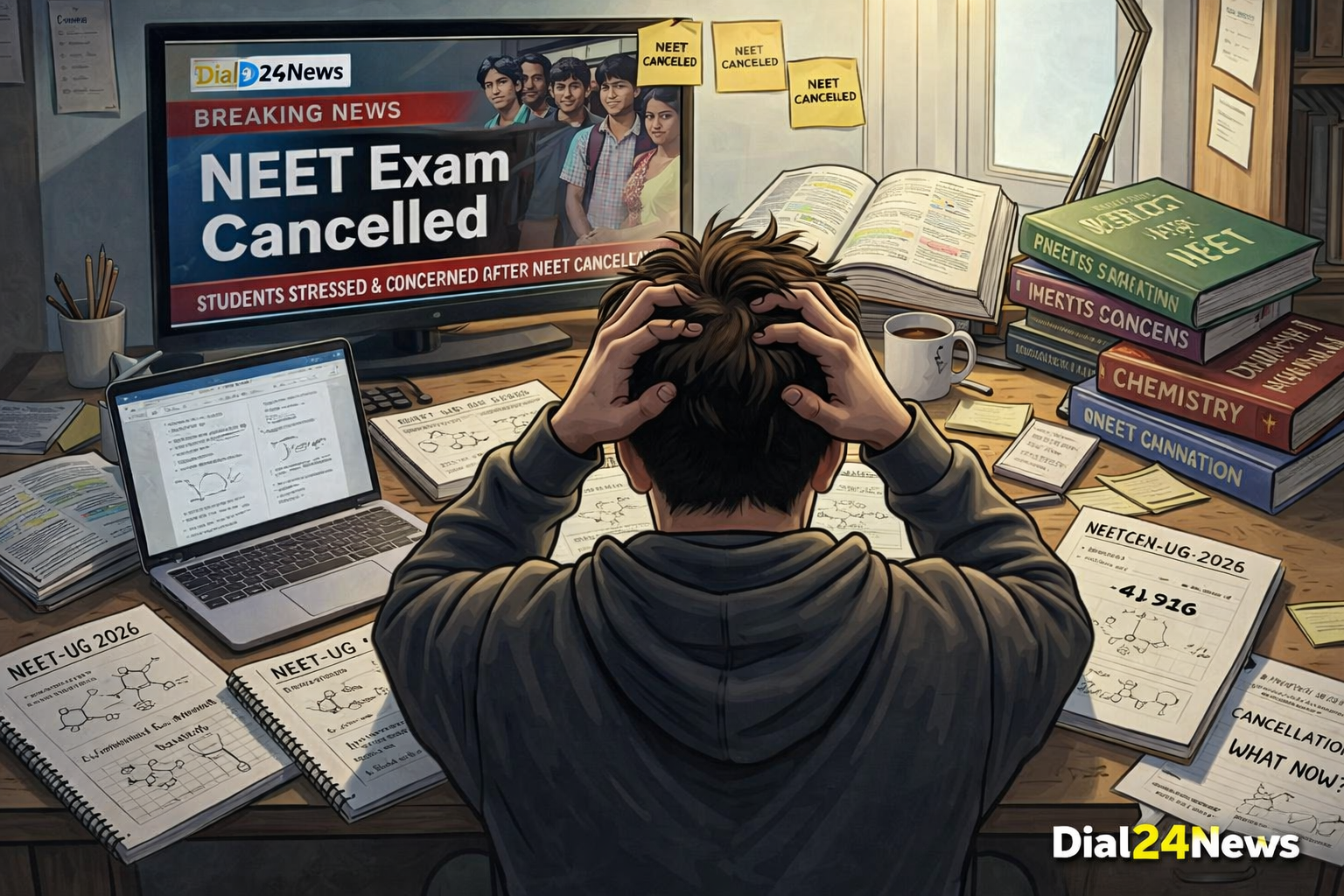
- Cancellation of NEET-UG 2026 after irregularities surfaced
- CBI investigation into a suspected leak network
- Widespread student protests demanding reforms
What the Government Has Announced
According to the Centre’s latest statement:
- NEET will shift fully to CBT (online exam mode) from next year
- Aim is to reduce paper handling risks and physical leaks
- Stronger digital monitoring and security systems will be introduced
- The government has reiterated a “zero tolerance policy” against exam malpractice
Officials also indicated that additional technical safeguards—such as biometric verification, AI-enabled surveillance,
and encrypted question delivery systems—may be expanded to ensure transparency.
Possible Changes in the New NEET System
While detailed guidelines are still awaited, early reports suggest:
- Computer-based testing in designated centres
- Digital question paper delivery instead of physical OMR sheets
- Stronger authentication (biometrics + ID verification)
- Real-time monitoring through CCTV and AI systems
- Faster result processing and reduced manual errors
Experts believe this could bring NEET closer to other CBT-based exams already conducted in India, though infrastructure
challenges for lakhs of students remain a concern.
Debate: Is CBT the Final Solution?
The decision has sparked a fresh debate in the education sector.
Supporters say:
- CBT reduces physical paper leak risks
- Easier monitoring and centralized control
- Faster evaluation process
Critics argue:
- Large-scale CBT exams may face hacking or system failures
- Rural and digital-access challenges for students
- Infrastructure readiness remains a major question
Some policy discussions are also exploring a hybrid model, where papers are digitally sent and printed at centres
under strict security protocols as an alternative approach.
Latest Update (Today)
Recent reports indicate that:
- NEET-UG 2026 controversy has intensified political and legal debate
- Investigations are ongoing with CBI probing the leak network
- A parliamentary panel has also revived discussion on whether pen-and-paper exams are actually safer
than CBT in India’s context