West Asia War LIVE: Iran Begins Funeral Procession for Ayatollah Ali Khamenei in Tehran
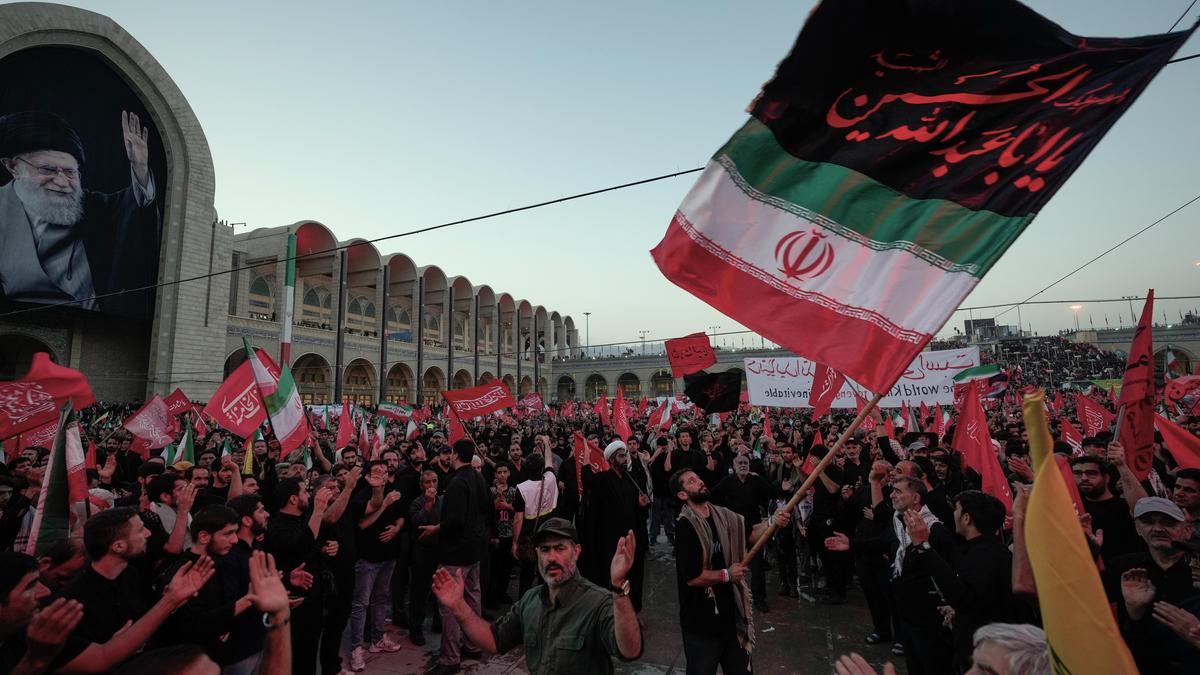
West Asia War LIVE: Iran on Monday began the funeral procession of its late Supreme Leader, Ayatollah Ali Khamenei, through the streets of Tehran, marking one of the country’s largest public ceremonies in decades. Thousands of people gathered from the early hours of the morning, waving Iranian flags, carrying portraits of the late leader, and chanting religious slogans as the procession moved across the capital. The event comes months after Khamenei was killed during the conflict involving Iran, Israel and the United States, a war that has significantly reshaped the geopolitical landscape of the Middle East.
The funeral procession is being held under extraordinary security arrangements, with authorities closing major roads, restricting airspace and deploying thousands of security personnel across Tehran. Iranian state media has described the ceremony as a national tribute to the leader who guided the Islamic Republic for more than three decades.
Thousands Join Tehran Funeral Procession
Large crowds assembled at Tehran’s Islamic Revolution Square before the procession officially began. Khamenei’s coffin, draped in the Iranian national flag, is being transported on a ceremonial vehicle specially prepared for the funeral. The coffins of family members who were also killed in the February airstrike are part of the procession.
Television footage showed mourners praying, crying and carrying banners praising the late Supreme Leader. Many participants also held photographs of Khamenei while chanting slogans expressing support for the Iranian leadership.
Authorities expect the funeral procession to continue for nearly twelve hours before reaching Mehrabad International Airport, from where the coffin will be transported to Mashhad, Khamenei’s birthplace, for burial at the revered Imam Reza shrine.
Heavy Security Across Tehran
The Iranian government has implemented one of the country’s largest security operations in recent years to ensure the funeral proceeds without disruption.
Several major roads have been closed, public transport routes modified and airspace restrictions imposed during the mourning period. Emergency services, police units and members of Iran’s Revolutionary Guard remain deployed throughout the city.
Officials have appealed to citizens to cooperate with authorities and avoid unnecessary travel while the ceremonies continue. The nationwide mourning period is expected to conclude later this week following Khamenei’s burial in Mashhad.
Funeral Draws Global Attention
The funeral has become a major international event, attracting attention from governments and political analysts across the world. Iran’s leadership transition is being closely monitored because of its potential impact on regional diplomacy, nuclear negotiations and security across West Asia.
Political observers believe decisions taken after the funeral could influence future relations between Iran, the United States and Israel. Diplomatic discussions involving the Strait of Hormuz and Iran’s nuclear programme are reportedly on hold until after the burial ceremonies conclude.
Senior Leaders Attend Ceremony
Senior Iranian political leaders, military commanders and religious scholars have joined the funeral ceremonies in Tehran. The gathering represents one of the largest displays of state unity since the conflict began earlier this year.
Reports indicate that three of Khamenei’s sons attended the ceremony, while his successor, Mojtaba Khamenei, did not appear publicly. Iranian media have cited security concerns for his absence, although his non-attendance has attracted international attention and speculation.
Emotional Scenes Across The Capital
The atmosphere throughout Tehran has been marked by grief, emotion and religious observances. Thousands of mourners lined the streets hours before the procession began, while many families travelled from different provinces to participate.
Images broadcast by Iranian media showed people holding flowers, national flags and portraits of Ayatollah Ali Khamenei as funeral prayers echoed across the city. The ceremony is widely viewed as one of the largest public gatherings in Iran’s recent history.
Impact On West Asia Conflict
The funeral comes at a sensitive time for the region. Although fighting between Iran, Israel and the United States has reduced following a ceasefire, tensions remain high.
Analysts believe the completion of the funeral ceremonies could pave the way for renewed diplomatic talks regarding regional security, sanctions and Iran’s nuclear programme. At the same time, the emotional public response during the funeral highlights the continuing political significance of the late Supreme Leader within Iran.
Energy markets are also watching developments closely because any renewed escalation involving Iran could affect global oil supplies through the Strait of Hormuz, one of the world’s most important shipping routes.
What Happens Next?
After the procession concludes in Tehran, Khamenei’s coffin will be flown to Mashhad, where final burial ceremonies will take place at the Imam Reza shrine. The conclusion of the week-long mourning period is expected to mark the beginning of a new political chapter for Iran.
The international community will continue to monitor Tehran closely for announcements regarding foreign policy, regional diplomacy and the country’s long-term leadership strategy. With negotiations expected to resume after the funeral, the coming days may prove critical for the future of West Asia.
Also read: DMart Stock Falls 4% After Q1 Update; Goldman Sachs, Macquarie Stay Bearish