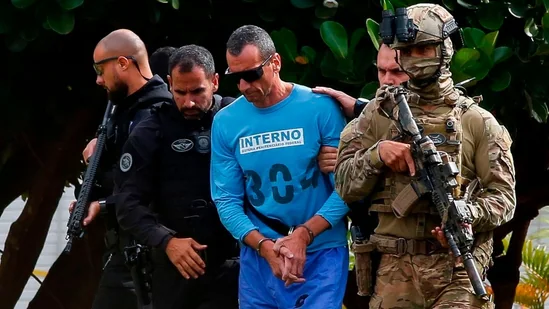
From jail cells to global cartel network: How Brazil’s prison-born gang rose as a cocaine superpower
How a Brazilian Prison Gang Transformed Into a Global Cocaine Empire
What began inside the overcrowded prison system of Brazil has now evolved into one of the most feared international criminal organizations in the world. The Primeiro Comando da Capital (PCC), a gang formed by inmates in São Paulo during the early 1990s, has reportedly expanded far beyond prison walls to become a dominant force in the global cocaine trade. Authorities now describe the group as one of the fastest-growing transnational crime syndicates operating across multiple continents.
Originally created in 1993 inside Taubate prison, the PCC was formed by prisoners demanding basic rights such as hygiene, safer conditions, and protection from abuse. But over time, the organization built a structured network that spread through Brazil’s prison system and later into city streets, ports, borders, and foreign markets. Today, investigators estimate the gang has around 40,000 members and associates, with operations in nearly 30 countries.
Cocaine Became the Core Business
The gang’s biggest leap came when it moved aggressively into South America’s cocaine routes. By building links in Colombia, Peru, and Bolivia, the PCC gained access to major drug-producing zones. It then used Brazil’s ports and transport networks to ship cocaine toward Europe, Africa, and increasingly North America.
European authorities have reported rising cocaine seizures tied to Brazilian routes, particularly through ports in Belgium and the Netherlands, where organized crime groups compete for control of lucrative trafficking channels. Investigators say the PCC helped reshape these routes with corporate-style efficiency.
A Different Type of Criminal Organization
Unlike violent street gangs that rely only on fear, the PCC is often described as a disciplined business-like organization. Experts say it uses a decentralized model, allowing members to run local operations while following internal rules. This structure has made it harder for law enforcement agencies to dismantle the network by targeting a single leader.
Even longtime boss Marcos Willians Herbas Camacho, known as Marcola, has remained imprisoned for years, yet the group has continued to grow.
Money Laundering and Legal Fronts
Authorities say the gang has also expanded into money laundering using businesses such as:
- Real estate
- Gas stations
- Logistics firms
- Small financial companies
- Retail fronts
These legal-looking operations allegedly help wash profits generated from narcotics trafficking.
Growing Concern for the United States

Though long focused on Europe, the gang is now drawing attention in the United States as well. U.S. authorities have previously sanctioned PCC-linked figures and identified alleged affiliates in states such as Florida, New York, New Jersey, and Massachusetts.
This has increased pressure for closer international cooperation against the group.
Brazil’s Ongoing Challenge
For Brazil, the PCC represents more than a gang—it highlights the country’s long-running prison crisis, corruption risks, and weak control over organized crime networks. Experts argue that poor prison conditions helped create the environment in which the gang first emerged.
Now, officials no longer speak only of eliminating the PCC, but of containing its reach and influence.