







Why windows rattle during the Kanwar Yatra even when sound meters show legal noise levels
Why low-frequency sound from Kanwar trucks shakes high-rise homes while everyday traffic fades into the background
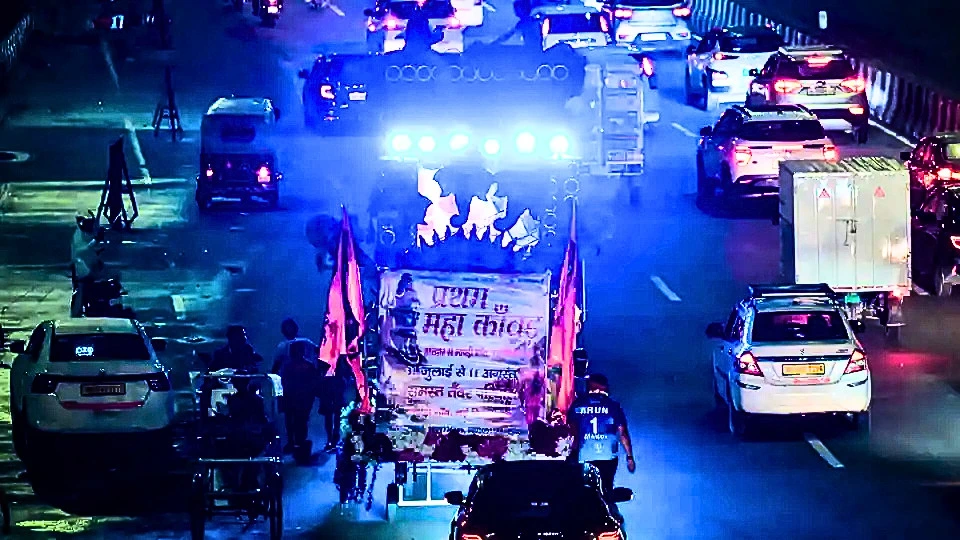
Every Kanwar Yatra season, the sound announces itself long before the truck comes into view. The first thing to arrive is not the headlights or the crowd, but a slow, heavy pulse that seems to move through the air and the building at the same time. In a high-rise apartment in Noida or Gurugram, even on the eleventh or twelfth floor, residents often notice the vibration before they can clearly identify the source. Double-glazed windows that block the constant noise of traffic, construction, and city activity offer surprisingly little protection against the deep bass from truck-mounted sound systems. The window frame begins to buzz, loose objects tremble, and the room feels as if it has developed a faint heartbeat.
The experience is not limited to buildings that stand directly on the roadside. In many Delhi , homes located one or two streets away from a major arterial road still feel the same low-frequency thump. The distance that softens the sound of engines, horns, and passing traffic does not weaken the bass in the same way. Doors quiver on their hinges, metal grills vibrate, and glass panels seem to respond with a subtle but persistent rattle. Residents often describe the sensation as something they feel in the chest or the floor before they consciously hear it. What makes these trucks so disruptive is not simply that they are loud; it is that their low-frequency sound travels farther, penetrates buildings more effectively, and turns ordinary structures into amplifiers of vibration in a way that everyday traffic rarely does.
Also Read: Why windows rattle during the Kanwar Yatra even when sound meters show legal noise levels
Set a sound meter beside you and the reading may remain surprisingly close to the legal limit. Yet the room can still feel as if it is vibrating. That is because the noise produced by many Kanwar trucks is not simply louder than ordinary traffic — it is dominated by low-frequency bass that behaves very differently from the sounds most noise regulations are designed to measure.
Deep bass from large subwoofers travels much farther than higher-frequency sound. It passes through walls, windows, and building materials more easily, loses less energy over distance, and is more likely to make objects vibrate than to create the sharp, obvious sound associated with horns or engines. People often notice it physically before they recognise it as a sound: a slight pressure in the chest, a trembling window frame, or a door that seems to shiver on its hinges. Conventional sound measurements can underestimate how intrusive this kind of bass feels indoors, even when the overall decibel level does not appear extreme. India’s noise regulations, however, largely evaluate noise through overall sound levels, which means the distinctive impact of strong low-frequency sound is often not treated separately.
Why windows and doors begin to vibrate
Sound is a wave of changing air pressure, and every wave has a wavelength determined by its frequency. Lower frequencies have much longer wavelengths, while higher frequencies have much shorter ones. Bass occupies the low-frequency part of the spectrum, so the waves it produces are physically large.
A tone around 50 hertz, which is common for powerful truck-mounted subwoofers, has a wavelength of roughly seven metres. By contrast, a sound around 5,000 hertz — near the upper range of human speech and many everyday urban noises — has a wavelength of only about seven centimetres. Because these long bass waves interact with buildings differently, they are far more effective at causing windows, doors, walls, and even entire rooms to resonate and vibrate, which is why the bass can be felt long after the rest of the traffic noise has faded into the background.